



The University of Valencia (UV) coordinates the European project PainGutPFC, which addresses one of the most prevalent health problems worldwide: chronic pain and its emotional and cognitive complications. The project studies the alterations in body-brain communication that cause chronic pain from an innovative approach combining basic research with direct clinical application. This month of January, studies in humans begin in Valencia, with the collaboration of the Institute of Agrochemistry and Food Technology (IATA-CSIC), of the University of Valencia Science Park (PCUV), and the Valencia General University Hospital Consortium (HGUV)
The Institute of Agrochemistry and Food Technology (IATA), of the Higher Council for Scientific Research (CSIC) and located in the scientific-academic area of the University of Valencia Science Park (PCUV), participates in the European project PainGutPFC, an initiative that investigates the communication between the gut and the brain as a fundamental way to understand chronic pain and its emotional and cognitive consequences. Coordinated by the University of Valencia (UV), the project addresses one of the most prevalent health problems worldwide through an innovative approach that integrates basic research and clinical application. In this context, IATA-CSIC contributes its wide experience in the study of the intestinal microbiome and its impact on human health. This month of January, clinical studies in humans begin in Valencia, in collaboration with the Consorcio Valencia General University Hospital Consortium (HGUV).
Chronic pain is the most common health condition globally and a major cause of disability, with an especially high incidence in women. Beyond physical suffering, it is often accompanied by emotional and cognitive disturbances that aggravate the patients' situation and significantly affect their daily lives, social relationships and psychological well-being. Pathologies such as rheumatoid arthritis, arthrosis or fibromyalgia often present noxoplastic pain and central sensitisation phenomena, in which the intensity of perceived pain does not correspond to obvious physical damage. This complexity explains why current treatments are often insufficient and leave many patients trapped in a progressive deterioration of their quality of life.
The contribution of the Microbiome and Innovation in Nutrition and Health (Innobiome) group of IATA-CSIC is oriented to the development of new diagnostic, preventive and therapeutic solutions based on the microbiome, in order to promote health from an integral approach
In this scenario, recent research has highlighted the crucial role of the gut-brain axis in regulating the emotional and cognitive state, as well as in disorders such as anxiety or depression. The PainGutPFC project assumes that these same connections can be decisive in the development and maintenance of chronic pain. Previous studies by the UV team, carried out in both animal models and patients, have shown that pain significantly alters brain reward circuits, favouring negative emotions, cognitive difficulties and maladaptive behaviors. These include excessive alcohol consumption as a form of self-medication, a behaviour that can intensify pain and perpetuate a vicious circle that is difficult to break.
Lucia Hipólito, professor at the Department of Pharmacy and Pharmaceutical Technology and UV Parasitology and project coordinator, explains: "This initiative analyses this issue using a translational strategy. That is, including preclinical studies in animals and clinical studies in humans in parallel, with a fundamental gender perspective approach that recognizes the significant differences between men and women in pain experiences and treatment responses".
The results of the project will move towards more targeted therapies and personalized medicine approaches focused on holistic health, with the aim of achieving faster and longer-lasting relief from chronic pain, Reduce drug dependence and lessen the burden of associated emotional disorders, such as anxiety, depression and problematic drinking.
Markers of intestinal microbiota
Within the framework of the project, the IATA-CSIC’s Microbiome and Innovation in Nutrition and Health (Innobiome) group contributes its expertise in the study of the intestinal microbiome and its relation to health. Their contribution focuses on the identification of intestinal microbiota markers associated with chronic pain and behavioral disorders, as well as the development of microbiome-based strategies with potential to improve this pathological condition.
The group investigates how the microbiome interacts with environmental factors such as diet or stress and with the human body itself, influencing the immune, endocrine and nervous systems and modulating both physical and mental health. "The group’s contribution is aimed at developing new diagnostic, preventive and therapeutic solutions based on the microbiome, in order to promote health from a comprehensive approach," explains the IATA team.
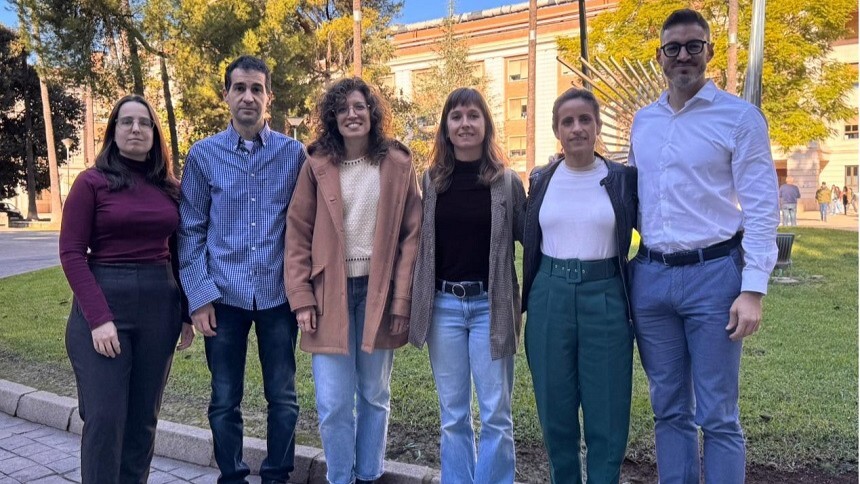
The research team of this project includes, in addition to Lucía Hipólito, Miguel Ángel Serrano, Noemí Sanmiguel, Ana Polache and Vicente Herranz, from the University of Valencia. Also participating are Jorge Fragío (Valencia General University Hospital Consortium, HGUV), and Ana Agustí and Marina Romaní (Institute of Agrochemistry and Food Technology, IATA-CSIC). The European consortium is completed by the participation of the University of Picardie Jules Verne (France), Grenoble Alpes University and the Grenoble Institute of Neurosciences (France) and the Maj Institute of Pharmacology of the Polish Academy of Sciences (Poland). Funding has been obtained through EraNet Neuron, a European international collaboration programme.
Source: IATA
Recent Posts