



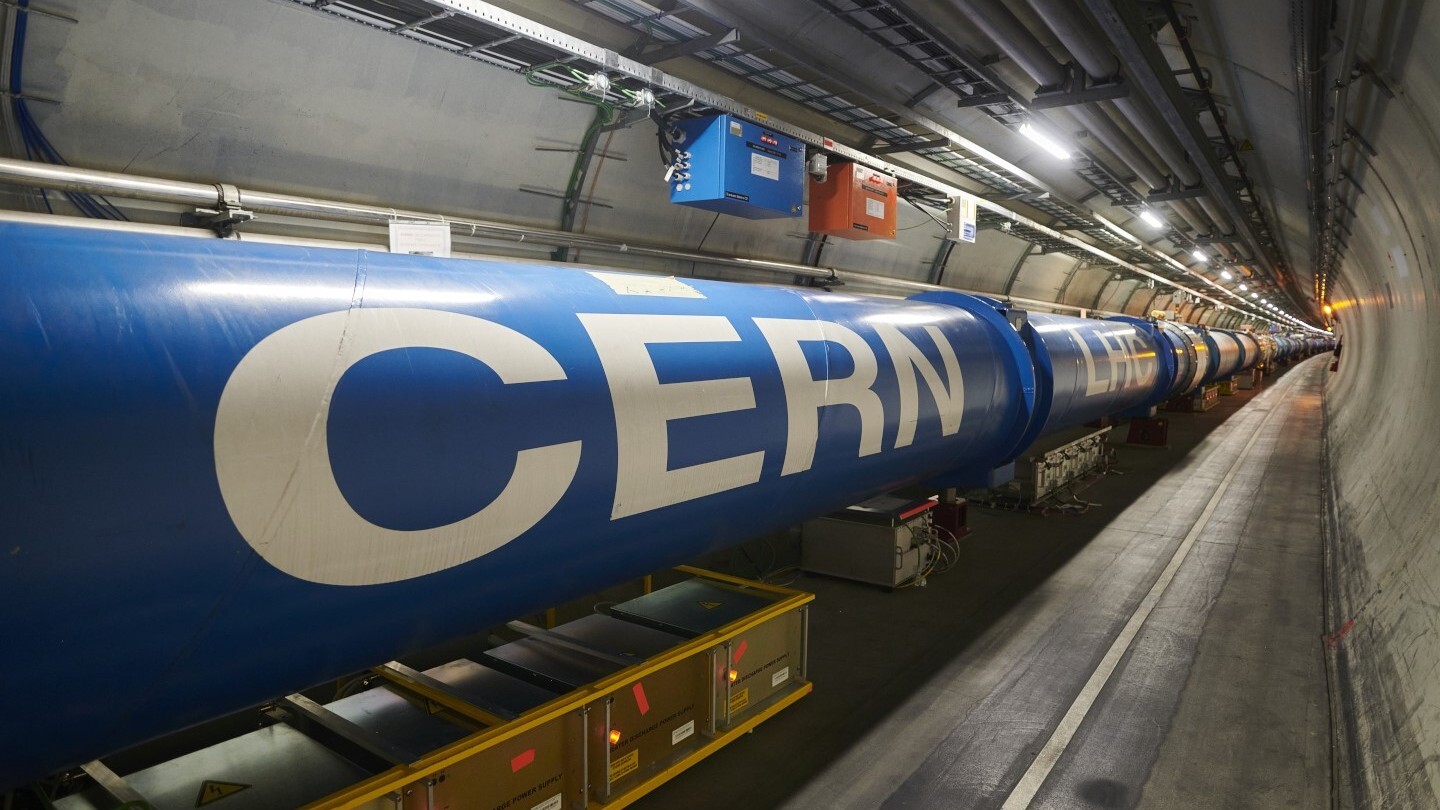
Published by CSIC and Catarata, the research staff of the Institute of Corpuscular Physics (IFIC), a research centre at the University of Valencia Science Park (PCUV), highlights the impact of these powerful tools on basic science, medicine, industry or the environment
X-ray scanners, cancer radiation treatments and our mobile phones' microchips have one link in common: particle accelerators. These devices capable of generating, accelerating and confining beams of electrically charged particles have been key to understanding the structure of matter and, thanks to their development and multiple applications, have become indispensable tools in today’s society. Almost a century after its emergence, the CSIC publishes 'Particle Accelerators. From the laboratory to society', the new volume of the collection What do we know about? (CSIC-Catarata).
Researchers from the Institute of Corpuscular Physics (IFIC), located in the scientific-academic area of the University of Valencia Science Park (PCUV), Nuria Fuster and Daniel Esperante propose a journey through the evolution of these powerful and complex machines. In just over 120 pages, particle accelerator experts review the functions of these devices, describe the scientific and technical concepts underlying their operation and present a number of applications in which they play a crucial role.
"The history of particle accelerators is evidence of human curiosity and scientific perseverance because, through technological advances in the construction of accelerators, a better understanding of the universe at sub-atomic levels and answers to fundamental questions about matter, energy and the fundamental forces that govern the cosmos"
"The history of particle accelerators is evidence of human curiosity and scientific perseverance because, through technological advances in the construction of accelerators, a better understanding of the universe at sub-atomic levels and answers to fundamental questions about matter, energy and the fundamental forces that govern the cosmos," they say. "They have also influenced many aspects of everyday life, from advanced medical care to cutting-edge technology and food security," they add.
The parts of an accelerator
Fuster and Esperante lead us to the inside of an accelerator to know its secrets. "The great secret of particle accelerators, and what makes them so interesting, is their ability to concentrate energy in tiny spaces in a controlled way," they point out.
IFIC experts explain that physics and engineering skills are needed to generate, drive and guide particles. From there, all particle accelerators, whether they vary in shape (linear or circular), size (from meters to kilometers in length) and technology (superconducting or not), share four main components: the source of particles, vacuum tubes and electric and magnetic field generators.
A revolution in medicine
According to the International Atomic Energy Agency (IAEA), there are more than 30,000 accelerators in use worldwide, of which over 97% are used for commercial purposes, including medical applications, accounting for around 45-50%. "Accelerator-based therapeutic and diagnostic techniques are playing a crucial role in the detection and treatment of complex cancers, as well as contributing significantly to the understanding of the functioning of key organs such as the brain, and the underlying causes of diseases with a high social impact, such as dementia", point out the researchers.
The year 1953 marked a historic milestone: a patient was treated for the first time with an X-ray beam linear particle accelerator. The authors stress that this breakthrough represented much more than a technical achievement: "was a leap into the future where radiation therapy became more precise and less harmful to healthy tissues".
"Accelerator-based therapeutic and diagnostic techniques are playing a crucial role in the detection and treatment of complex cancers, as well as contributing significantly to the understanding of the functioning of key organs such as the brain, and the underlying causes of diseases with a high social impact, such as dementia"
Decades later, the use of X-rays in radiation therapy has come a long way and is now the most common technique for treating cancer. "In a radiation therapy line, X-rays are adjusted and moulded to take the exact shape of the patient’s tumor; they are even used after surgeries to remove remnants of cancerous tissue in areas close to the tumor," the scientists explain.
Accelerators in industry
Particle beams generated by accelerator technology also play a key role in industry. Their level of accuracy and sensitivity is combined with the advantage of being generally non-invasive or destructive procedures. Thus, accelerators are applied in nanotechnology manufacturing as an ideal tool for creating nanostructures. They are also used to mass-sterilize medical devices such as implants or surgical tools, by means of electron beams, or at customs and airports in order to scan containers, trucks or suitcases for hazardous or illegal substances.
In the environmental field, its potential is exploited to treat waste water and remove organic pollutants so that they are not discharged into rivers and seas. "A high-powered accelerator has been used in a waste water treatment plant in South Korea to treat up to 10,000 cubic metres per day of water from the textile industry, and has demonstrated high efficiency in removing non-degradable organic impurities.", the authors are highlighted.
About the authors
Nuria Fuster Martínez is a PhD in Physics from the University of Valencia and CDEIGENT researcher from the Generalitat Valenciana at the IFIC. She has worked at different international accelerators, including the Large Hadron Collider (LHC) in Switzerland and the Accelerator Test Facility (ATF) in Japan, as well as international collaborations of accelerators such as CLIC/ILC and HL-LHC.
Daniel Esperante Pereira is a telecommunications engineer, doctor of physics and CSIC scientific researcher at the IFIC. Has worked for years at CERN in experiments such as LHCb and international collaborations of future colliders such as CLIC and ILC.
Source: IFIC
Recent Posts